Perhaps the most striking thing about collecting data in rural India is discovering how little farmers earn. I have now sat through dozens of interviews where farmers are enumerating their farm incomes and expenditures, and I keep thinking that they would be better off if they were to simply give up farming and engage in manual labor. Small farm sizes, lack of water, and high input costs all contribute to low incomes.
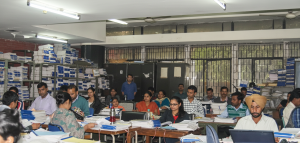
At least that is what I think when I look at the data. Every time I sit through discussions with a group of farmers and barely-off-the-farm colleagues like O.P. Sharma or Dinesh Tiwari, I am reminded that this is a labor of love. Interviewing farmers is an art, and Sharma and Tiwari are true artists. In village interviews with a group of farmers, within 15 minutes they are able to zoom into crops that grow in any area, typical yields, seed costs, types of fertilizers and pesticides that are needed and peak labor demand and wages that need to be paid. Most importantly, there is true joy on their faces and that of their respondents that is incomprehensible to someone like me, whose family is two generations out of farming. That joy is no less than a group of Americans watching the Super Bowl or Indians watching the World Cup Cricket.
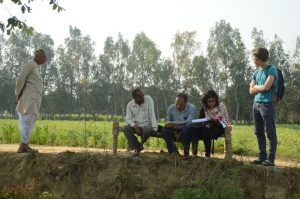
It is at times like this that I realize farming is a vocation, not just the means of earning a living. There is a real poignancy in watching these interviews because deep in my heart I feel that I am watching a species that is about to become extinct. Already, full-time farming is a vanishing category in rural India. In 2004-5-, only 51% of the rural males worked as full-time farmers or farm laborers; 21% engaged in both farm and non-farm work, and 28% engaged only in non-farm work. Less than 50% of rural incomes come from farm-related activities. In 2011-12, Less than a quarter of the rural households drew even 50% of their incomes from agriculture and allied activities.
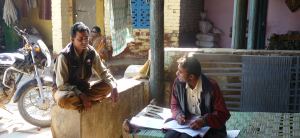
I am not enough of a traditionalist to worry about these changes if they bring higher incomes and prosperity to rural areas. But there is something endearing as I watch these interviews. I am watching the passing of an era, and the least I can do is to bear witness to the love of the land that my colleagues and our respondents share.